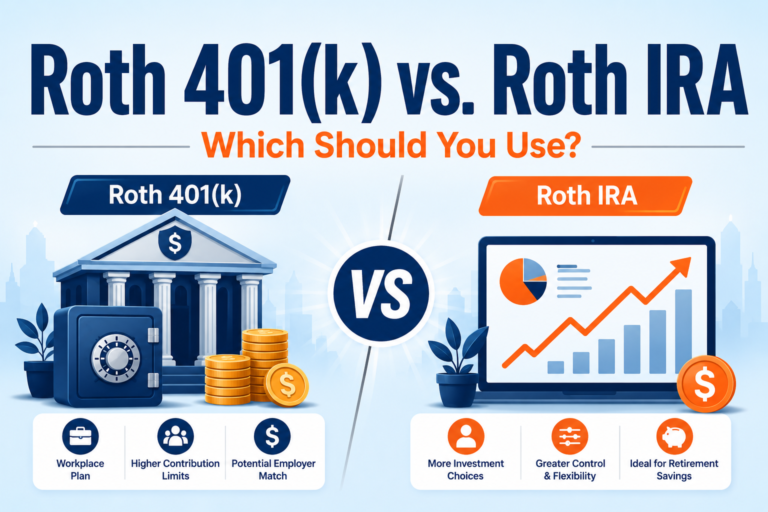
Roth IRA Contribution Calculator: How Much Can You Contribute in 2026?
Answer a few quick questions about your age, your income, and your tax filing status, and this Roth IRA contribution calculator will tell you exactly how much you’re allowed to contribute this year, whether you qualify for a full or partial amount, and if you’re eligible at all.
- Free to use, no sign-up needed
- Updated for 2026 IRS income and contribution limits
- Works for single, married, and head-of-household filers
Up to $0 across your eligible IRAs.
Traditional and Roth IRAs share one combined annual limit — the totals above are the most you can put in each type, not amounts you can add together. Estimates use official IRS phase-out ranges and are for planning only; check with a tax professional for your exact situation.
| Your information | Impact on the results |
|---|
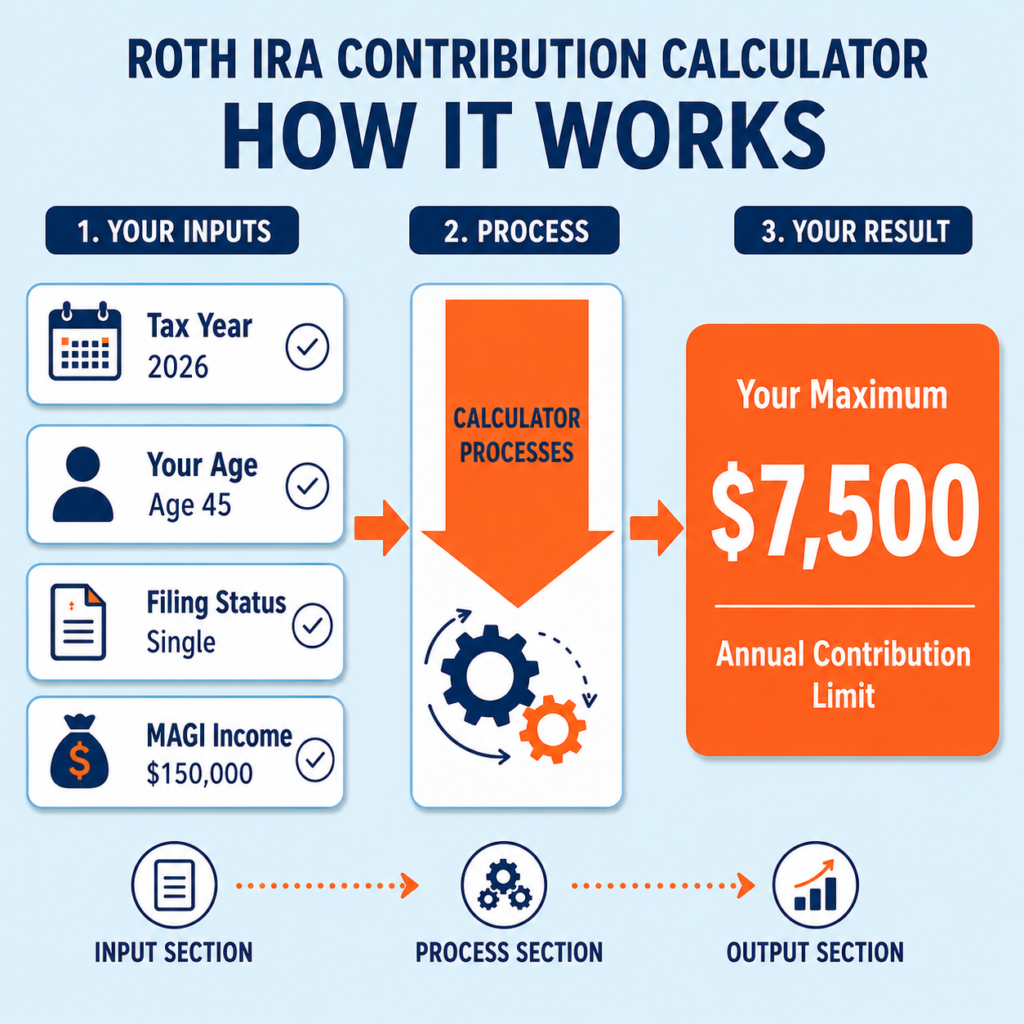
For 2026, the Roth IRA contribution limit is $7,500 if you’re under 50, or $8,600 if you’re 50 or older. But how much you can actually contribute depends on your income and tax filing status. Enter your details into the calculator above to find your exact limit.
What Is This Roth IRA Contribution Calculator Check?
Instead of digging through IRS tables, this Roth IRA eligibility calculator uses a few simple details to work out your personal numbers:
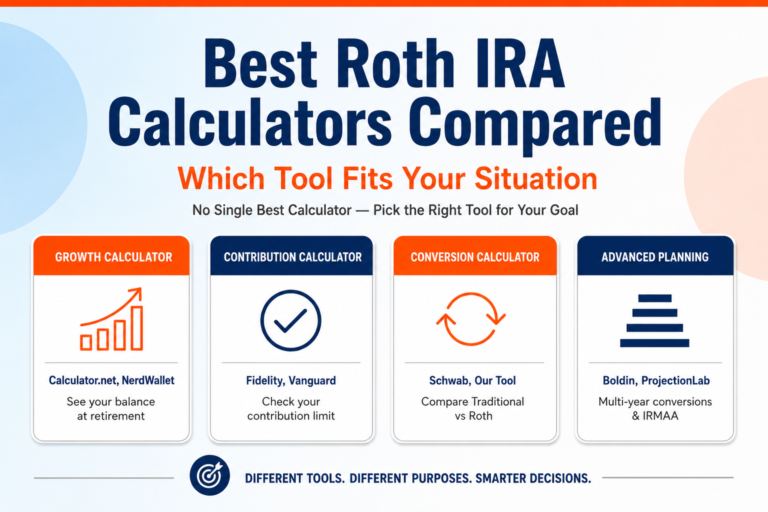
Once you enter these, the calculator tells you your maximum allowed contribution for the year. If you’d also like to see how those contributions could grow over time, try our Roth IRA calculator to project your balance at retirement.
2026 Roth IRA Contribution Limits
The IRS raised the Roth IRA contribution limit by $500 for 2026. Here’s how this year compares with recent years:
|
Tax Year |
Under Age 50 |
Age 50 and Older |
|
2026 |
$7,500 |
$8,600 |
|
2025 |
$7,000 |
$8,000 |
|
2024 |
$7,000 |
$8,000 |
|
2023 |
$6,500 |
$7,500 |
This limit is combined across all your IRAs. If you have both a traditional and a Roth IRA, your total contributions to both accounts together can’t go over this number. You also can’t contribute more than you earned in taxable income for the year. You have until Tax Day of the following year to contribute, for example, until April 15, 2027, for the 2026 tax year.
Roth IRA Income Limits and Phase-Out Ranges
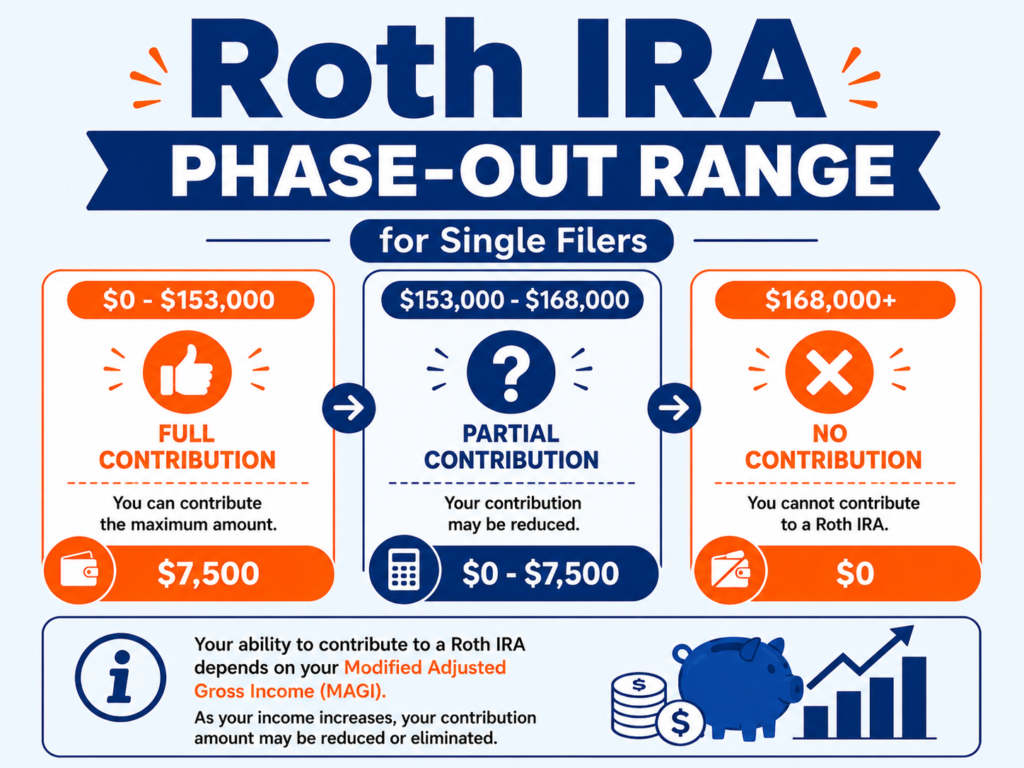
Your income decides whether you can contribute the full amount, a reduced amount, or nothing at all. This is where a Roth IRA income limits calculator like this one becomes useful, since the math isn’t as simple as one cutoff number.
|
Filing Status |
Full Contribution If MAGI Below |
Partial Contribution Range |
No Contribution If MAGI At Or Above |
|
Single or head of household |
$153,000 |
$153,000-$168,000 |
$168,000 |
|
Married filing jointly |
$242,000 |
$242,000-$252,000 |
$252,000 |
|
Married filing separately (lived with spouse) |
$0 |
$0-$10,000 |
$10,000 |
How the Roth IRA Phase-Out Range Works?
If your MAGI falls inside the phase-out range, you don’t lose your Roth IRA eligibility all at once. Your allowed amount shrinks gradually the closer you get to the top of the range. This is often called a reduced Roth IRA contribution or a partial Roth IRA contribution.
As a simple example: if you’re single and your MAGI sits roughly in the middle of the $153,000–$168,000 range, you’d generally be allowed to contribute around half of the standard limit, rather than the full amount or nothing. A partial contribution calculator like this one does that math for you automatically, based on the IRS formula.
What Is MAGI, and How Is It Different From Your Regular Income?
MAGI stands for modified adjusted gross income. It starts with your adjusted gross income (the number near the bottom of the first page of your tax return) and adds back a small number of specific deductions, such as student loan interest or certain foreign income exclusions. For most people, MAGI ends up being very close to their regular AGI.
Because MAGI is the number that decides your Roth IRA eligibility, it’s worth double-checking it carefully rather than estimating. For a full walkthrough of how to calculate it, see our guide on what MAGI is and how it’s calculated.
What If You Contribute Too Much?
If you put in more than you’re allowed, the IRS treats it as an excess Roth IRA contribution and charges a 6% excise tax on the extra amount for every year it stays in the account. The good news is this is fixable if you catch it before your tax filing deadline; you can withdraw the excess contribution (plus any earnings on it) and avoid the penalty entirely.
In some cases, instead of withdrawing the money, you can also ask your provider to recharacterize the contribution, which effectively treats it as if it had gone into a different type of IRA from the start. A financial advisor or tax professional can help you decide which option fits your situation.
How Much Should You Contribute Each Month?
If you’re under 50 and want to max out your Roth IRA for 2026, that comes to about $625 per month to reach the full $7,500 limit. If you’re 50 or older and want to use the full catch-up contribution, that’s roughly $717 a month to hit $8,600 for the year.
Roth IRA vs. Traditional IRA Eligibility
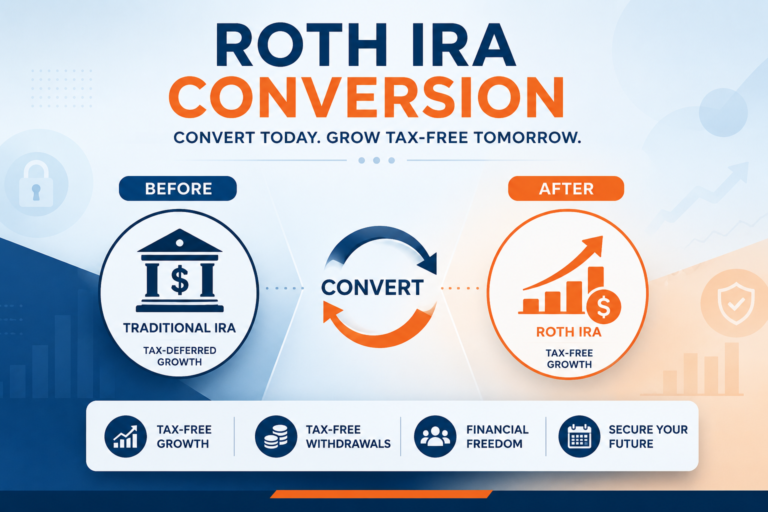
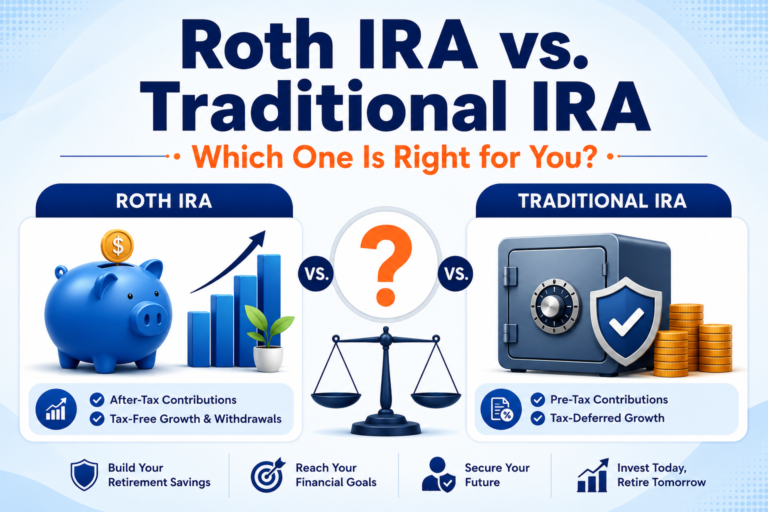
Unlike a Roth IRA, a traditional IRA has no income limit on contributions; anyone with earned income can contribute up to the annual limit. The trade-off is that your ability to deduct those contributions can be reduced if a workplace retirement plan covers you or your spouse. If you earn too much to contribute to a Roth IRA directly, a traditional IRA (or a backdoor Roth conversion) is usually the next option worth looking at. For a full side-by-side comparison, see our Roth vs. Traditional IRA calculator.
Frequently Asked Questions
The Bottom Line
Your Roth IRA contribution limit isn’t just one number; it depends on your age, your income, and how you file your taxes. Use the calculator above with your own details to see exactly how much you can put in this year, and check back each January when the IRS releases updated limits for the new tax year.